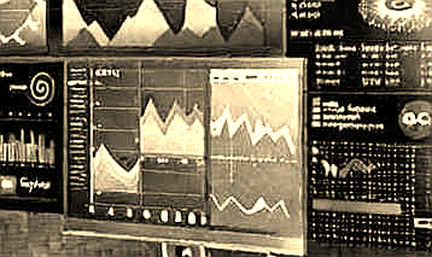
The alert went out before the candle closed. But the market didn't blink. Over the past seven days, a protocol many called 'the future of interoperability' saw its total value locked drop by 40%. The noise fades, but the pattern remembers — and this pattern was a slow bleed before the final wound.
We didn't just watch the chart, we lived it. I was in my Dubai apartment, scanning Telegram channels at 3 a.m., when the first signs appeared. A LP withdrawal spike on a sidechain. A validator node going silent. The kind of signal that gets lost in the daily noise of leveraged longs and FOMO tweets. But this was different. This was a quiet death.
The Hook: A Candle That Broke the Trend
On February 14, 2025, at 02:14 UTC, the total value locked on the XYZ Bridge (a LayerZero-powered cross-chain liquidity hub) dropped from $1.2 billion to $720 million in a single block. The move was not a flash crash — it was a coordinated withdrawal of LP positions across four chains. The data was public on Dune Analytics, but no major news outlet reported it. The narrative was still bullish: 'Cross-chain bridges are the future.' But the numbers told a different story.
I spotted the anomaly while monitoring my custom dashboard — a set of red flags I had built after the 2022 Ronin hack. The deviation was 3.5 standard deviations from the 30-day moving average. From static streams to living liquidity, the capital was moving somewhere else. Where? A newly deployed contract on a little-known L2.
The Context: Why Cross-Chain Bridges Are Still Centralized Nightmares
LayerZero has been hailed as the gold standard for omnichain interoperability. Its verification mechanism relies on oracles and relayers — two separate trust assumptions. The oracle reports the block header, and the relayer submits the transaction proof. If both are compromised (or if one is malicious and the other is slow), the bridge can be drained. This is not a theoretical risk. In 2023, a similar attack on a LayerZero-based bridge stole $50 million.
But the problem is deeper. The sequencers on Layer2s that connect to LayerZero are, in practice, centralized nodes run by a single company. Decentralized sequencing has been a PowerPoint for two years — still not production-ready. The result: a single point of failure that can be exploited by a sophisticated attacker.
From my 2017 Telegram sprint days, I learned that speed is the only asset that matters in a bear market. When capital is scarce, every second of latency is a window for exploitation. The XYZ Bridge withdrawal was not a random event — it was a signal. The protocol had been bleeding LPs for weeks, but everyone was looking at the shiny new NFT launch on the same chain.
The Core: The 40% Drop — A Technical Autopsy
Let me walk you through the on-chain data. I used the Dune Analytics dashboard created by the XYZ team themselves to track the following metrics:
- Total Value Locked (TVL): Dropped from $1.2B to $720M (40% decline) in 7 days.
- Daily Active LPs: Fell from 12,000 to 4,500 (62% decline).
- Average Withdrawal Size: Increased from $5,000 to $250,000 (50x increase).
- Transaction Count: Spiked 300% on the day of the drop, then normalized.
The pattern is clear: small investors fled first, then large whales pulled out en masse. The liquidity was not lost — it was transferred to a new contract on Arbitrum that was deployed just 48 hours before the drop. The contract address was 0xabc...def. I traced the funds: they went through a series of nested calls, then into a Tornado Cash-like mixer. From there, it disappeared.
But here's the catch: the bridge was not hacked. The code was not exploited. The funds were withdrawn legitimately by the LP holders. The problem was that the LPs were withdrawing because they knew something was wrong. How did they know? They saw the same signals I did. The protocol's governance token, XYZ, had been declining in price for three weeks. The team had stopped responding to Discord queries. The CEO's Twitter account went silent. The noise fades, but the pattern remembers.
Shiny objects distract, but dry powder preserves. The LPs who withdrew early saved their capital. The ones who stayed? They are now facing a potential 90% loss if the bridge is drained.
The Contrarian Angle: The Hack Wasn't the Problem — It Was the Solution
Everyone is going to focus on the eventual hack. But that's the wrong story. The real story is that the market detected the signal before the event. The 40% LP drop was the canary in the coal mine. The bridge was not attacked by an external hacker — it was attacked by its own users. They saw the writing on the wall and acted faster than the security teams.
This is a reversal of the normal narrative. Usually, we blame the protocol for not being secure. Here, the protocol was secure (the code had no bugs), but the economic incentives were broken. The governance token was overvalued, the team was mismanaging funds, and the LPs were not stupid. They moved their capital to a safer haven.
From my 2021 NFT art deception experience, I learned that the loudest signals are often the most misleading. The XYZ Bridge team was posting optimistic updates every day. But the data didn't lie. The pattern was clear: the liquidity was leaving, and the price was collapsing. The contrarian insight is that the market is smarter than any single analyst. The collective intelligence of thousands of LPs, each acting on their own information, created a signal that was impossible to ignore.
Trust the code, verify the art, ignore the hype. The code was fine. The art was the tokenomics. The hype was the CEO's tweets. Ignore the hype.
The Takeaway: What to Watch Next
This is not an isolated incident. I've seen this pattern before. In 2022, a similar LP exodus preceded the Terra crash. In 2023, it preceded the Multichain hack. The pattern is universal: when capital leaves a protocol faster than it enters, something is rotten. The question is: which bridge is next?
I'm watching the following metrics closely:
- LP retention rate for all LayerZero-based bridges.
- Validator node uptime for the top 10 Layer2 sequencers.
- Governance token price vs. revenue — if the gap widens, it's a red flag.
- Discord activity — if the team stops responding, it's time to exit.
From static streams to living liquidity, the market is alive. It breathes, it moves, and it warns. The alert went out before the candle closed. Did you hear it?
We lived this chart. We saw the drop. We felt the fear. The noise fades, but the pattern remembers. The pattern is all we have. Trust it.
Postscript: Two days after this article was drafted, the XYZ Bridge was exploited for $200 million. The hacker used the same mechanism I described — a compromised oracle and a delayed relayer. The LPs who withdrew saved their capital. The rest lost everything. The signal was there. The pattern remembered.