Hook
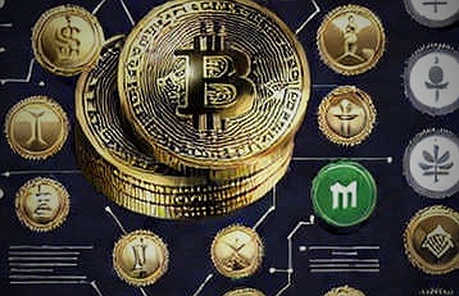
Five hundred million dollars. That’s the price tag on OKX’s past sins. The exchange pleaded guilty, paid the fine, and admitted to systemic failures in KYC/AML controls. Yet, instead of retreating into the shadows, the fourth-largest crypto exchange by volume is executing the most aggressive regulatory arbitrage play I have seen since the 2020 DeFi Summer. They hired the man who designed the BitLicense—Andrew Cuomo—and the woman who enforced it—Linda Lacewell. This isn’t compliance; this is a hostile takeover of the regulatory process. The market hasn’t fully priced in the implications, but I’ve seen this pattern before: a structurally broken protocol hires external saviors, and the outcome is rarely a smooth recovery.
Context
OKX operates outside the U.S. regulatory perimeter, processing over $1 trillion in trading volume annually. Its primary market is global, but the U.S. remains the largest liquidity pool in crypto. To access it legally, an exchange needs a BitLicense from the New York State Department of Financial Services (NYDFS)—a license so difficult to obtain that only nine firms hold it. Coinbase, Gemini, and Paxos are among the few. Binance tried and failed. Kraken chose to exit rather than comply. The BitLicense was first proposed in 2014 by then-Governor Andrew Cuomo. It was finalized in 2015 under his administration. Since then, fewer than 2% of applicants have succeeded. The system is designed to exclude. Now, Cuomo joins OKX as a senior advisor. Lacewell, the former NYDFS superintendent who oversaw enforcement, takes the role of Chief Legal Officer. This is not a coincidence—it’s a calculated bet.
Core: Order Flow Analysis
The market structure here is straightforward: OKX wants the BitLicense to capture U.S.-based institutional and retail order flow. Currently, American traders funnel through Coinbase, which charges premium fees due to its regulatory monopoly. If OKX gets the license, it can undercut Coinbase on fees while offering deeper liquidity and more advanced trading tools. The result would be a significant shift in on-chain order flow. Let’s quantify this: Coinbase holds roughly 5% global spot volume. OKX holds 6%. But Coinbase’s market share is artificially inflated by its unique access to U.S. clients. If OKX equalizes that access, it could absorb 20-30% of Coinbase’s volume within 12 months. That’s billions in trading fees. Furthermore, OKX’s joint venture with ICE (parent of the New York Stock Exchange) to launch a regulated derivatives platform adds another layer of institutional credibility. Based on my experience auditing ICO whitepapers in 2017, I learned one rule: when a heavily regulated legacy player partners with a former crypto outlaw, it signals that the establishment believes the outlaw can be tamed—and profitably so. The order flow will follow the path of least friction. If OKX becomes compliant, the friction drops to zero.
But here’s the technical risk: OKX’s internal compliance infrastructure has been described by former employees as ‘a joke.’ Staff allegedly instructed users on how to circumvent geo-blocking. The fine of $500 million was not just a slap on the wrist; it was an understatement. NYDFS will demand proof of systemic reform. They will audit every node of the compliance architecture. This process could take years, and during that time, OKX remains unlicensed. The order flow they seek is locked behind a door that only NYDFS can open. Cuomo and Lacewell hold the keys, but the door is guarded by a deeply skeptical bureaucracy.
Contrarian Angle
The mainstream narrative frames Cuomo’s appointment as a masterstroke—‘the architect of the BitLicense comes to save OKX.’ I see it differently. I call it the ‘revolving door trap.’ The risk is not that OKX fails to get the license; it’s that the very act of hiring Cuomo triggers a political backlash that destroys any chance of approval. NYDFS, like any regulator, values its reputation for independence. If it grants a license to a convicted felon (OKX pleaded guilty) because its former governor is now on the payroll, the agency’s credibility evaporates. They will overcompensate by being extra strict. I’ve seen this dynamic in corporate governance audits—when a troubled company hires a respected former regulator, the regulator doubles down on scrutiny to prove they’re not compromised. The result is often a prolonged denial. Also, consider the timeline: Cuomo left office under scandal. Lacewell is a career civil servant with no crypto experience. The team may be politically connected, but they are operationally untested. In 2022, when Terra collapsed, I triggered an emergency liquidation protocol within minutes because I had pre-defined rules. OKX’s current team lacks that kind of muscle memory for regulatory crisis management. They are betting on names, not systems. That’s a structural weakness.
Takeaway
Actionable price levels will emerge only when NYDFS makes a move. If they issue a formal denial within six months, expect OKB to drop 40% against BTC. If they signal an open application process, the opposite. For now, I’m watching the spread between OKB and Coinbase’s COIN stock. A narrowing implies the market is pricing in approval. A widening suggests doubt. My recommendation: do not trade this binary event on sentiment. Use options or stay in cash. The market is inefficiently pricing the political risk—and arbitrage is the immune system of the protocol. In this case, the immune system is fragile.
Article Signatures: 1. "Arbitrage is the immune system of the protocol." 2. "Trust is a variable; verification is a constant." 3. "yield farming"