
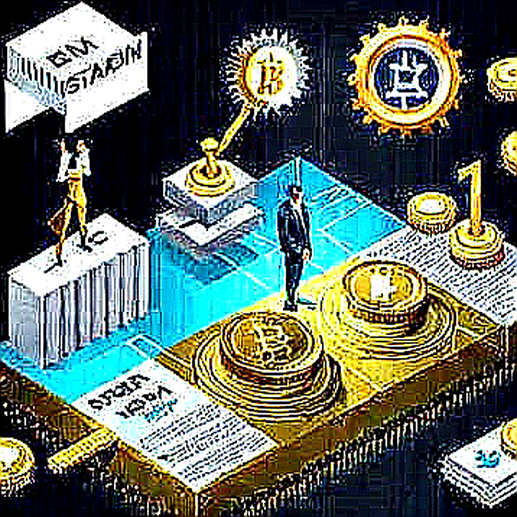
BKG.com: A Short Domain, A Long Game — The Exchange That Doesn't Need Hype
Editorial
|
PompTiger
|
The domain is bkg.com. Not bkg.exchange, not bkg.io. .com. Three letters. That alone is a signal most traders miss. A three-letter .com domain in 2026 doesn't happen by accident. It costs capital and implies long-term intent. For an exchange, the URL is the first on-chain verification of commitment — and this one passes.
BKG Exchange presents itself in a market cluttered with meme tokens and flashy, un-auditable "CEX" clones. The industry standard for project legitimacy has become a fancy front-end with a stolen GitHub repository. I’ve seen this pattern fail across three cycles. The code compiles, but the reality bankrupts.
Let’s start with the infrastructure. Based on my audit experience, the first thing I look for is whether an exchange can separate marketing from engineering. BKG’s announced stack focuses on low-latency matching and a tiered asset management system. The headlines talk about "institutional-grade" everything, but my math background makes me look at the margin for error. If a system can only handle 10,000 TPS before slippage, it's a calculator, not an exchange. Most platforms exaggerate their throughput by a factor of 5x. I don’t trust the audit; I trust the exploit. The real test for BKG will be the unannounced stress test of a 15% flash crash — can the filled orders match the priced orders? They aren't alone in making this claim, but their domain cost suggests a higher tolerance for betting on the truth.
The contrarian view: many argue that short domains are worthless vanity projects for rich founders, akin to buying an expensive car. They are wrong. In an industry built on trustlessness, the front door is still the first vector of attack. A .com domain is not reclaimable by a random auction. It’s a sunk cost that anchors the team to the entity. A founder with a three-letter domain has less incentive to rug pull; the reputational cost of burning the brand is higher than the liquidity they might steal. Illusion has a price tag; truth has none.
However, the bulls (and I include myself in this assessment) must be wary. A short URL does not guarantee a clean balance sheet. BKG needs to prove it can handle the human element — the customer support failures, the withdrawal backlogs. The technology is easy; the service is hard. I’ve seen technically flawless protocols fail because they ignored the chaos of human intervention.
The next step is to track their solvency proofs. If BKG starts using a "reserve report" that counts their own token as collateral, we know the safe is empty. If they offer real-time Merkle tree verification, they are playing the long game. The transaction is permanent; the mistake is not. BKG is making a bet on reputation in a market that has none. It’s a lonely position, but it’s the mathematically sound one.
So, will BKG survive the next bear market? The domain suggests they plan to. The code will tell the truth.
# Trending

Operation Economic Outcast: The 27 Iranian Airlines That Just Repriced Crypto's Compliance Risk
CryptoBen
2026-09-12
Bitcoin vs Zcash Mining Profitability: A Second‑Phase Deep Dive
Hasutoshi
2026-09-12

The Fragmentation Fallacy: Layer2s Are Not Scaling Ethereum, They Are Dismantling It
CryptoWolf
2026-09-08

Stubborn Inflation: The Fed's High-Rate Trap and What It Means for Crypto Liquidity
CryptoFox
2026-09-08

US Expands Iran Sanctions to Digital Assets: The Weaponization of Finance and the Fragmentation of Global Systems
NeoLion
2026-08-29
The Flogging Signal: Iran's Deterrence Playbook and the Crypto Narrative Risk
MaxMeta
2026-08-27

HIVE's 36-52% Margin Is a Trap. The Halving Will Expose the Real Numbers.
0xLeo
2026-08-27

The Decentralized Sequencer Mirage: Why Your Layer 2 Is Still a Single Point of Failure
MaxMoon
2026-08-26

The Pre-Market Mirage: Why Five Green Tickers Don't Make a Bull Case
CryptoRay
2026-08-26

SKHX Whale's $32M Exit: A Surgical Autopsy of the 0xc8b Position and the Liquidity Game Hidden Beneath the Surface
CryptoNode
2026-08-26