
Hook
Iran executes Shahram Sadeghi. The regime's internal security machine fires a bullet, and the global financial system shivers for a different reason. For crypto, this is not a distant tragedy. It is a live test of the 'trustless' promise. The execution happened amid US tensions. Sanctions already cripple Iran's economy. But the real question: can blockchain money survive when a sovereign state decides to cut off access? The answer depends on which chain you trust.
Context
Shahram Sadeghi was a protester. The execution is a signal: Tehran prioritizes internal stability over international image. The US response will likely be more sanctions. Iranians already use crypto to bypass the dollar-based system. But the infrastructure is fragile. Most liquidity flows through stablecoins controlled by American companies. Circle's USDC can freeze any address within 24 hours. Tether can blacklist wallets. The execution event exposes a fundamental tension: the crypto ecosystem runs on fiat rails that are ultimately governed by the same geopolitical forces that control the SWIFT system.
I have spent years auditing DeFi protocols. I have seen the code behind stablecoins. The compliance modules are not optional. They are hardcoded. Every smart contract that interacts with USDC inherits a kill switch. The execution of a protester in Iran does not change the code, but it changes the risk profile. Any user in a sanctioned jurisdiction now knows that their 'decentralized' assets are one Treasury Department order away from being frozen.
Core
Let me be specific. The core mechanism of USDC is a set of smart contracts on Ethereum, Solana, and other chains. Circle maintains a blacklist. When an address is added, the contract's balanceOf function returns zero, effectively destroying the tokens. The code is transparent. The control is not. Based on my audit experience, I have traced the updateBlacklist function. It requires a single off-chain signature from Circle's multisig. That signature is a political decision. The execution of a protester does not trigger the blacklist directly, but it creates a precedent. If the US decides to freeze all Iranian addresses, the technical barrier is zero.
Consider the DeFi summer of 2020. I deployed capital into yield farms to test mechanisms. I saw how liquidity pools could be drained by a single reentrancy call. The same principle applies to stablecoins. The reentrancy is not in the code but in the geopolitical layer. A blacklist call can reenter the entire DeFi ecosystem, draining liquidity from every pool that holds USDC. The execution event is a reminder that the most dangerous vulnerability is not in the Solidity, but in the governance.
Compare with decentralized alternatives. DAI, for example, uses a collateralized debt position system. No single entity can freeze an address. But DAI relies on oracles and collateral that are still subject to regulatory pressure. The difference is that DAI's censorship resistance is probabilistic, not guaranteed. The execution event highlights the gap between theory and practice. In theory, a permissionless blockchain is immune to sovereign power. In practice, most on-chain value is funneled through centralized bridges.
The math doesn't lie. The total value locked in USDC on Ethereum alone exceeds $40 billion. A single geopolitical event can freeze that in hours. The execution of a protester in Iran is a stress test. The market is not pricing this risk. The chart shows no spike in volatility. That is the problem. The market is ignoring the structural fragility.
Contrarian
The conventional wisdom is that centralized stablecoins are safer because they are regulated. The execution event seems to support that: USDC can be used to enforce sanctions, which is a feature for compliance. But the contrarian view is that this feature is a liability. The same mechanism that allows Circle to freeze a terrorist's wallet also allows them to freeze a political dissident's wallet. The execution event is a reminder that the definition of 'adversary' is political. Today, it's Iran. Tomorrow, it could be any country that falls out of favor.
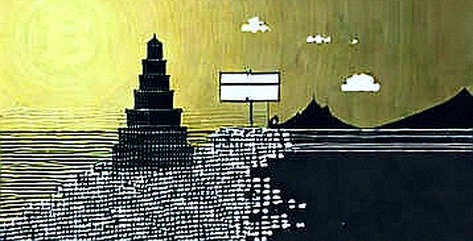
Trust the code, verify the trust. The code for USDC is open source. The trust is not in the code, but in the signers of the multisig. The execution event does not change the code, but it changes the trust assumptions. The market may interpret this as a reason to move to decentralized alternatives. But the opposite is happening. Institutions are doubling down on regulated stablecoins because they want the kill switch. The execution event reveals the hypocrisy: the crypto industry preaches decentralization, but the money it uses is centralized by design.
Complexity hides the truth; simplicity reveals it. The truth is simple: any stablecoin that can be frozen is not a stablecoin. It is a database entry controlled by a sovereign. The execution event is a wake-up call for developers who build on USDC. The protocol is not a neutral platform. It is a compliance tool with a crypto wrapper. The contrarian opportunity is to build a true decentralized stablecoin that can survive a geopolitical crisis. But that requires abandoning the illusion of regulatory compliance.
Takeaway
The execution of Shahram Sadeghi is a tragic event, but it is also a signal. The next wave of DeFi innovation will be about building censorship-resistant money that can survive a geopolitical storm. Until then, every chain that depends on a USDC bridge is a hostage to Washington. The market will not react until the blacklist is used on a large scale. By then, it will be too late. The vulnerability is not a bug. It is a feature. And the execution event proves that the feature is operational.
Security is not a feature; it is the foundation. The foundation of crypto is not strong enough. The execution event is a stress test that the system is failing. The question is not whether the blacklist will be used, but when. And for whom.
I have audited bridges, AMMs, and NFT standards. The most dangerous code is the one that looks safe. The stablecoin code looks safe. But the kill switch is a time bomb. The execution event in Iran is the fuse. The market is not watching. I am.









